Main panel or electrical service replacement / upgrade
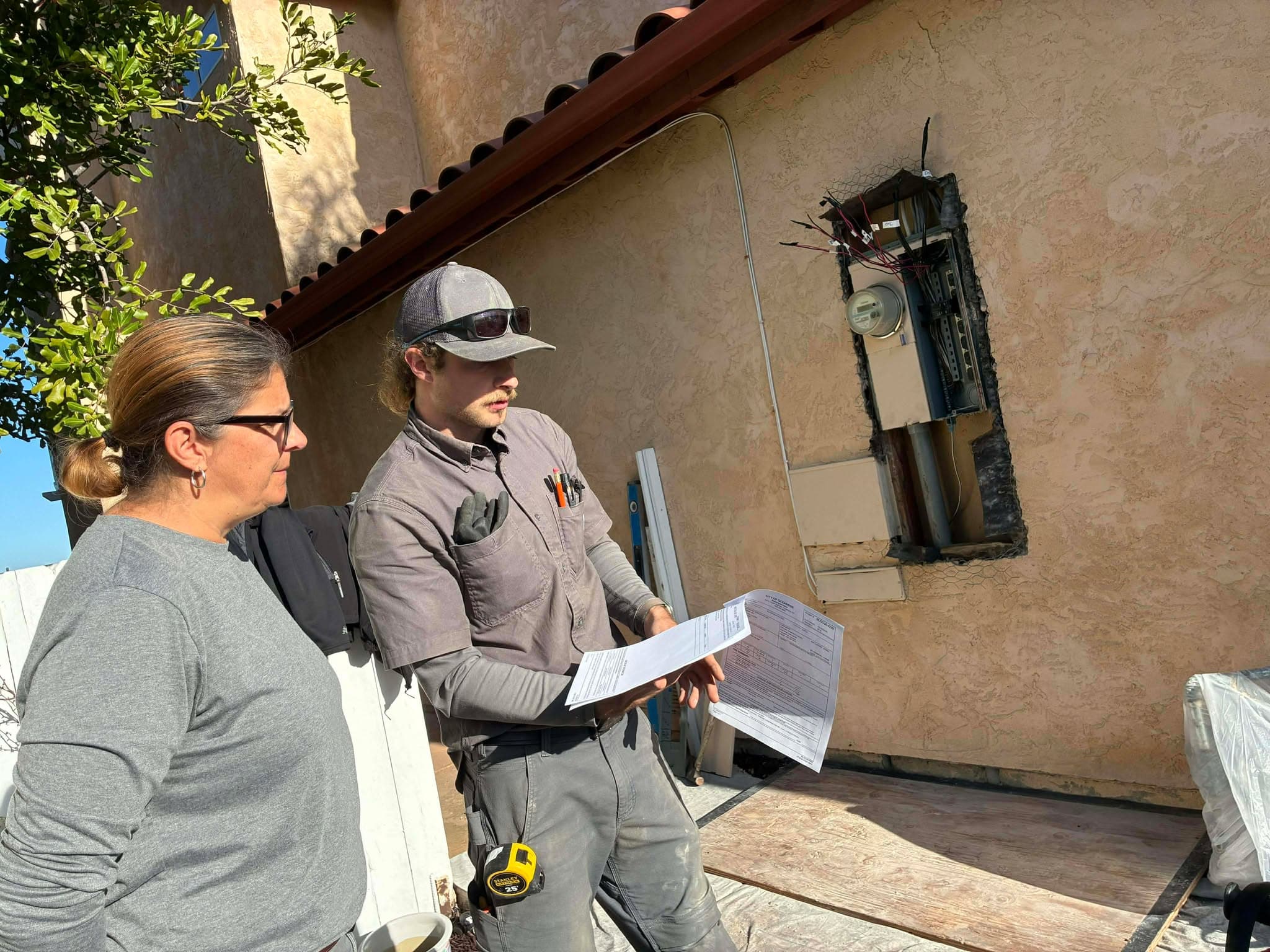
Panel upgrade serviceService equipment changes normally require an electrical permit, inspection, and coordination with SDG&E.

What needs one, what may not, and how to correct unpermitted work.
A practical guide for San Diego County homeowners planning electrical work, checking a property before a sale, or dealing with improvements that have no clear permit record.
Licensed C-10
CSLB #1116358
5.0 on Google
72 verified reviews
Same-day response
Urgent calls prioritized
Family owned
Bonded and insured
The short answer
If a project adds a circuit, moves or extends wiring, changes the electrical service, or installs a new fixed load, treat it as permit-required until the correct building department confirms otherwise. The City of San Diego specifically identifies meter work, added circuits, relocated outlets, rewiring, and private-garage EV chargers as electrical-permit work.1
Limited like-for-like repairs may be exempt. In the City of San Diego, that can include replacement or repair of certain switches, breakers, luminaires, and receptacles when the replacement is the same size and general type. County rules use their own exemption language. An exemption is not permission to violate the electrical code.2,5
The clean rule for homeowners
Ask before work starts. The permit authority is based on the project address—not the contractor's address, the utility territory, or the words “San Diego” in the mailing address.
Project-by-project guide
Scope details matter. Historic status, multifamily use, commercial use, structural work, and coastal review can change the application path.
Service equipment changes normally require an electrical permit, inspection, and coordination with SDG&E.
Adding capacity or new wiring is not the same as repairing an existing device.
The City and County both identify Level 2 charging installations as permitted and inspected work.
City of San Diego guidance specifically includes adding circuits, relocating outlets, and rewiring.
These projects add fixed equipment, wiring, and often a new circuit or disconnect.
Some jurisdictions exempt narrow, same-size and same-type repairs. Confirm before starting.
Sources for the screening table: City of San Diego electrical-permit and exemption guidance, County permit exemptions, County EV charger guidance, and Oceanside panel-upgrade guidance.1,2,5,6,14
Permitted vs. unpermitted
City inspection guidance states that permitted construction is not approved until inspection staff have inspected and accepted it. Work requiring inspection must be checked before it is covered or concealed.3
Checking a property
City of San Diego records from 2003 forward are generally searchable online, while older material may require an in-person search. County PDS provides online tools for unincorporated properties and a records-request route for material not online.4
Use the building department serving the exact property. Search address variations and the assessor parcel number when available.
A solar permit does not prove a panel upgrade was approved. Compare the permit description with the actual equipment and work.
Look for inspection dates, correction notices, approvals, and a final or completed status—not merely an application or issuance.
Download the permit summary and final record when available. Keep them with invoices, plans, photos, and property documents.
Common warning signs
Missing records do not automatically prove the work is unsafe. Clean-looking work does not prove it was permitted or inspected either. Treat records and physical condition as two separate checks.
A newer panel, charger, subpanel, or remodel has no matching permit record.
The permit exists, but its status is expired, cancelled, open, or missing final approval.
New wiring disappears behind finished walls with no inspection history.
The seller, contractor, or prior owner cannot provide the permit number or final inspection record.
Workmanship shows open splices, double taps, missing covers, improvised grounding, or mismatched equipment.
Correcting unpermitted work
The least-expensive sequence is records first, inspection second, correction scope third. Opening walls too early can create avoidable repair cost; waiting until an escrow deadline can force rushed decisions.
The City of San Diego does not issue permits for every San Diego County address. Incorporated cities run their own programs; unincorporated communities use County Planning & Development Services.
Look for the project scope, issuance date, inspections, and completion status. A permit number by itself does not prove that the work passed final inspection.
Keep invoices, contracts, photographs taken before walls were closed, equipment data, plans, SDG&E work orders, and any old inspection cards. They can reduce guesswork.
The first visit should identify immediate hazards, compare the visible installation with permit records, and define what can and cannot be verified without opening finishes.
Depending on the scope, the authority may require a new permit, plans or calculations, access to concealed work, corrections, and one or more inspections. The building official decides the path.
Do not stop after permit issuance. Complete required inspections, resolve corrections, confirm final approval, and retain the final record with the property documents.
Inspectors need access to the work they are asked to approve. City guidance requires electrical panels and junction boxes to be open and accessible and states that permit-required work must be inspected before concealment. Existing concealed work may require additional access when compliance cannot otherwise be verified.3
A contractor can document conditions and recommend a practical scope. The local building official determines which permit, plans, corrections, inspections, and code provisions apply to the existing installation.
Owner-builder or contractor?
Property owners can often apply as owner-builders, and licensed contractors can apply within their authorized classification. California's CSLB says an owner-builder assumes responsibility for permits, inspections, subcontractor supervision, and the integrity of the project.1,7
CSLB also states that anyone contracting to perform a project that requires a permit—or a project valued at $1,000 or more in combined labor and materials—must hold a current, valid contractor license.8
For electrical work we contract to perform, we can coordinate the applicable permit, inspection, and utility steps as part of a defined project scope.
Buying or selling a home
California Department of Real Estate guidance identifies alterations, replacements, and repairs made without required permits among facts that may affect residential property value and desirability. It also explains that sellers of most one-to-four-unit residential properties must provide the statutory transfer disclosure statement.9
A buyer should compare visible improvements with permit records and inspection history. A seller should gather records early, investigate known gaps, correct urgent hazards, and discuss property-specific disclosure duties with a qualified real estate professional or attorney.
Find your permit authority
Use the project address to confirm city limits. If the property is unincorporated, start with County PDS.
San Diego, La Jolla, Carmel Valley and other addresses inside city limits
Development Services Department
Addresses inside Del Mar city limits
Del Mar Building Services
Encinitas, Cardiff-by-the-Sea, Leucadia and Olivenhain
Encinitas Building Division
Addresses inside Solana Beach city limits
Solana Beach Building Services
Addresses inside Carlsbad city limits
Carlsbad Building & Permits
Addresses inside Oceanside city limits
Oceanside Building Division
Addresses inside San Marcos city limits
San Marcos Building Division
Addresses inside Escondido city limits
Escondido Building Division
Addresses inside Poway city limits
Poway Building Services
Rancho Santa Fe and other properties outside incorporated city limits
County Planning & Development Services
Agency links and process details were checked against official City and County pages.4,10,11,12,13,14
Common questions
No. Local rules contain limited exemptions for certain minor repairs, but the details vary by jurisdiction. In the City of San Diego, examples include same-size and same-type replacement or repair of certain switches, breakers, luminaires, and receptacles. Adding a circuit, moving wiring, increasing load, or installing new fixed equipment is different and generally requires a permit.
Yes. Local agencies treat panel and service changes as permitted work. The project may also require an SDG&E work order, utility disconnect and reconnect, electrical inspection, and final release.
Yes. San Diego County states that Level 2 charger installation in the region requires a permit and inspection before use. The correct application and supporting documents depend on the city, property type, charger, circuit, and whether the service needs modification.
Often, yes, as an owner-builder. That also means the homeowner accepts responsibility for the permit, code compliance, inspections, project integrity, and certain employer obligations. Hiring a properly licensed electrical contractor keeps that technical and administrative responsibility with the contractor for the contracted electrical scope.
Sometimes, but it is not an automatic approval. The authority having jurisdiction determines the application, documentation, access, corrections, fees, and inspections required. Concealed work may need to be exposed far enough for the inspector to verify it.
Not automatically. The required scope depends on what was installed, when it was installed, its condition, the applicable code, and the work covered by the new permit. The building official—not the contractor or an online guide—makes the final determination.
Search the property through the correct city or County permit system and review the permit status and inspection history. Look for completed or final approval, not only an issued permit. Older records may require an in-person or public-records request.
Yes. California Department of Real Estate guidance identifies alterations and repairs made without required permits among facts that can affect a property’s value and desirability. Sellers and buyers should discuss property-specific disclosure obligations with their real estate professional or attorney.
It depends on the jurisdiction and scope. Some agencies use flat trade-permit fees; others calculate fees from circuits, equipment, valuation, plan review, or additional inspections. A reliable estimate must identify the address and exact work first.
Not always. The City of San Diego excludes designated or potentially historic properties from its simple no-plan route in some cases. Solana Beach advises that some single-trade permits may avoid Coastal Commission approval, but applicants must submit the project so the City can confirm.
Sources & references
Reviewed September 13, 2026
City of San Diego Development Services Department
Electrical Permit
Permit types, common no-plan work, applicant qualifications, and EV charger requirements.
City of San Diego Development Services Department
Plan (required) Electrical Permit
Electrical permit exemptions and plan requirements.
City of San Diego Development Services Department
Inspections
Required inspections, final acceptance, concealment, and site-access requirements.
City of San Diego Development Services Department
Permit Records and Mapping Information — Information Bulletin 110
Permit research tools, record availability, and older records.
County of San Diego Planning & Development Services
Building Permit Requirements — PDS 110
County permit rules and narrow electrical permit exemptions for unincorporated areas.
County of San Diego
Level 2 Charger Installation
Regional EV charger permit and inspection guidance.
California Contractors State License Board
Owner-Builder Responsibilities
Owner-builder responsibility for permits, inspections, subcontractors, and project integrity.
California Contractors State License Board
What Kind of Contractor Do You Need?
California licensing rules for permitted work and projects valued at $1,000 or more.
California Department of Real Estate
Basic Contract Provisions and Disclosures in a Residential Real Estate Transaction
Residential disclosure guidance concerning alterations and repairs performed without required permits.
City of Encinitas
Building Permits and Inspections
Permit requirements, inspections, completion records, and address searches.
City of Del Mar
Building Services
Electrical permit applications, plan review, and inspection contacts.
City of Carlsbad
Permitting
Permit process, plan check, exemptions, and online services.
City of Solana Beach
Building Services
Permit requirements, permit history, contractor qualifications, and coastal review notes.
City of Oceanside
Building Division FAQs
Panel-upgrade permits, SDG&E coordination, inspections, and permit expiration.
This guide is general educational information, not legal advice or a permit determination for a specific property. Requirements, fees, forms, code editions, and agency procedures change. Confirm the project address and scope with the responsible building department before work begins.
Permit questions, answered
Send the property address, photos, and any permit records you have. MIZO Electric will identify the practical next step and give you a clear written scope.