01
Federal 30C credit ended June 30, 2026
The federal Alternative Fuel Vehicle Refueling Property Credit (Section 30C) previously covered 30% of qualifying home-charger hardware and installation costs, up to $1,000 for eligible property.
Under current federal guidance, the credit does not apply to property placed in service after June 30, 2026. A qualifying installation completed by that deadline may still be claimable on the appropriate tax return, subject to the census-tract and other eligibility rules.
If your charger was operational by June 30, 2026, confirm the placed-in-service date, location eligibility, and filing requirements with a tax professional. We provide electrical documentation, not tax advice.
02
SDG&E programs
SDG&E's biggest EV benefit for most homeowners is not a charger rebate — it is the special EV rate plans (EV-TOU) that make overnight charging much cheaper, plus an annual EV Climate Credit for EV owners.
SDG&E's "Power Your Drive" charger-rebate programs are aimed mainly at apartments, condos, workplaces, and fleets, and residential availability is limited. Check SDG&E's current EV incentives page for what is open today.
- EV-TOU rate plans — lower overnight rates for charging at home.
- EV Climate Credit — an annual bill credit for EV owners.
- Power Your Drive — charger rebates focused on multifamily, workplace, and fleet (not typical single-family).
03
What about panel upgrades?
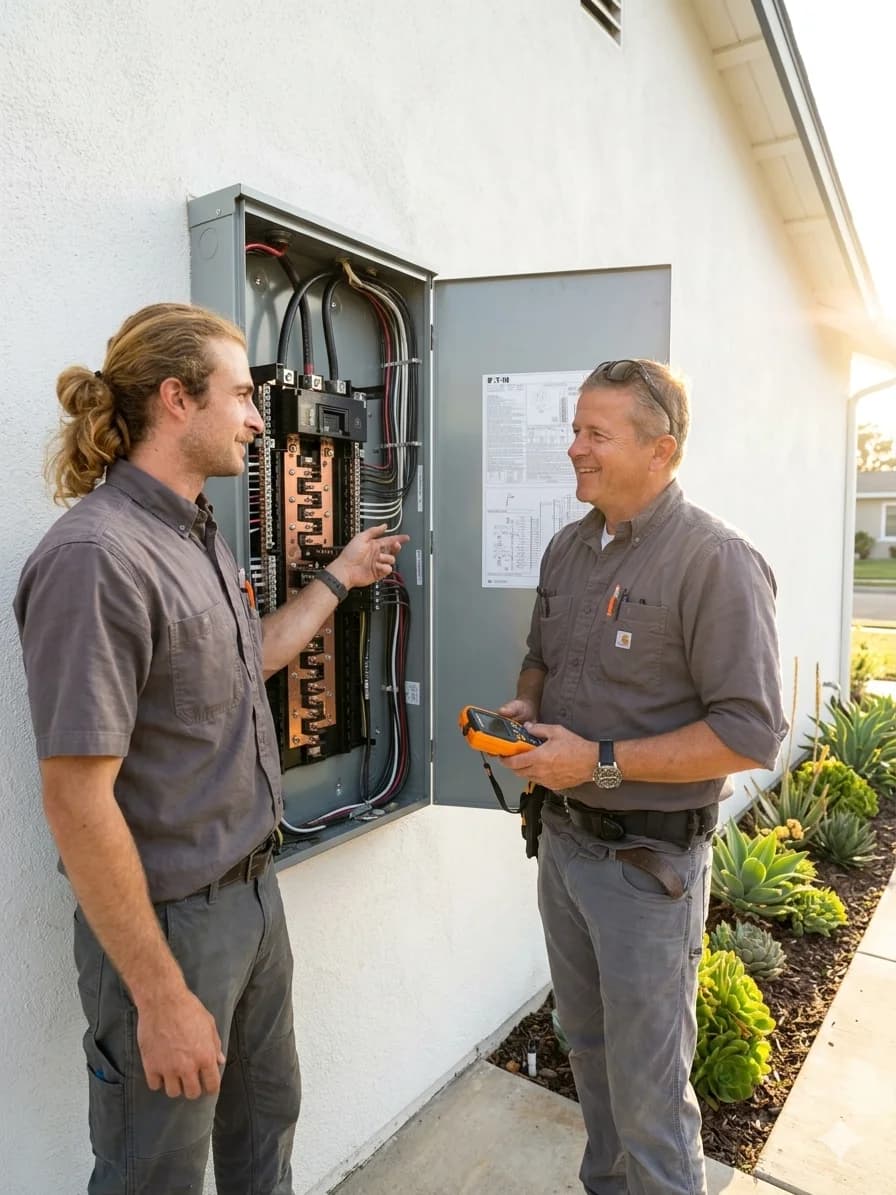
Panel upgrades themselves rarely come with a direct rebate. But an upgraded panel is often the gateway to other electrification incentives — for example, programs that reward installing a heat pump or heat-pump water heater frequently assume your panel can support the new load.
So while the panel work is usually out of pocket, it can unlock savings elsewhere if you are electrifying the rest of the home.
04
The bottom line
Incentives change, funding can close, and eligibility is specific to the property and customer. Verify current availability at the official source before relying on any savings figure. We keep this page dated so an old program is not presented as current.
Official sources
Common questions
Before you decide.
Can every homeowner still get the $1,000 federal credit?+
No. The 30C credit does not apply to property placed in service after June 30, 2026. Earlier installations also had location and other eligibility requirements.
Can I claim the credit for an installation completed before the deadline?+
Possibly. If the equipment was placed in service by June 30, 2026, confirm the location, documentation, and filing requirements with a qualified tax professional.
Will SDG&E pay for my home charger?+
Generally not for single-family homes — SDG&E's charger rebates focus on multifamily, workplace, and fleet. Its main residential benefit is cheaper EV rate plans and the EV Climate Credit.
Do panel upgrades qualify for rebates?+
Rarely on their own. But a panel upgrade can be a prerequisite for other electrification incentives (like heat-pump programs), so it can enable savings indirectly.